Why Does My Garbage Disposal Hum But Not Spin? (And How to Fix It)
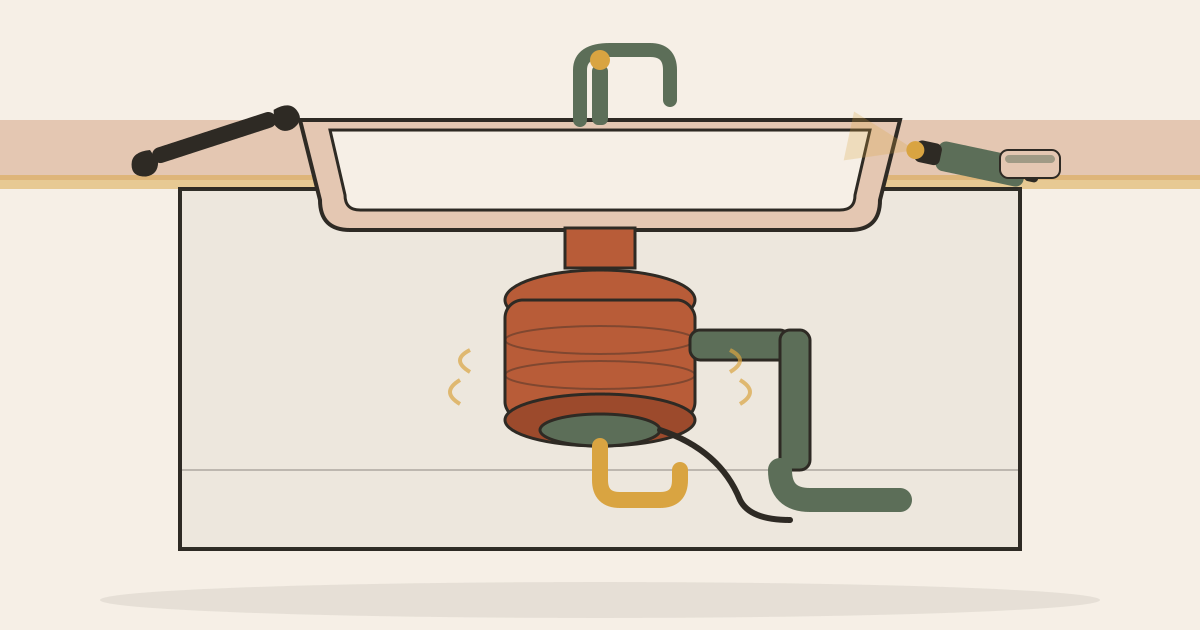
A humming garbage disposal almost always means the motor is fine but the blades are jammed — not a dead unit. Most fixes take under 10 minutes and no tools you don’t already own.
That hum is actually useful information. It tells you electricity is reaching the motor and the motor is trying to run — it’s just physically blocked from turning. A disposal that’s truly dead (broken motor, fried wiring) usually stays silent, not humming. So before you assume you need a replacement, work through the situations below.
If you hear a hum and nothing else happens
This is the classic jam. Something solid — a fruit pit, a bit of glass, a bone fragment, a wayward spoon — is wedged between the spinning plate (called the impeller or flywheel) and the outer wall of the grinding chamber. The motor spins up, hits the obstruction, and stalls, which is what produces that steady hum instead of the usual grinding noise.
Key takeaway: Turn off and unplug the disposal first, then clear the jam manually before trying the reset button.
Here’s the safe order of operations:
- Kill the power. Flip the wall switch off, and if the disposal is plugged into an outlet under the sink, unplug it too. Never put your hand in the disposal while it’s connected to power, even if it’s “off.”
- Look for the hex hole. Most disposals have a small hexagonal opening in the center of the bottom of the unit, underneath the sink. This is for a standard 1/4-inch Allen wrench (many models ship with one taped to the unit).
- Turn the flywheel by hand. Insert the wrench and crank it firmly in both directions. You’re trying to break the impeller free of whatever it’s stuck on. It usually takes some real effort — don’t be shy about applying pressure.
- Fish out the debris. With the flywheel now loose, use tongs or pliers (never fingers) to reach into the chamber from the top and pull out whatever caused the jam.
- Hit the reset button. There’s usually a small red or black reset button on the underside of the unit. Push it in until you feel a click.
- Restore power and test. Run cold water and switch the disposal on briefly. If it spins freely, you’re done.
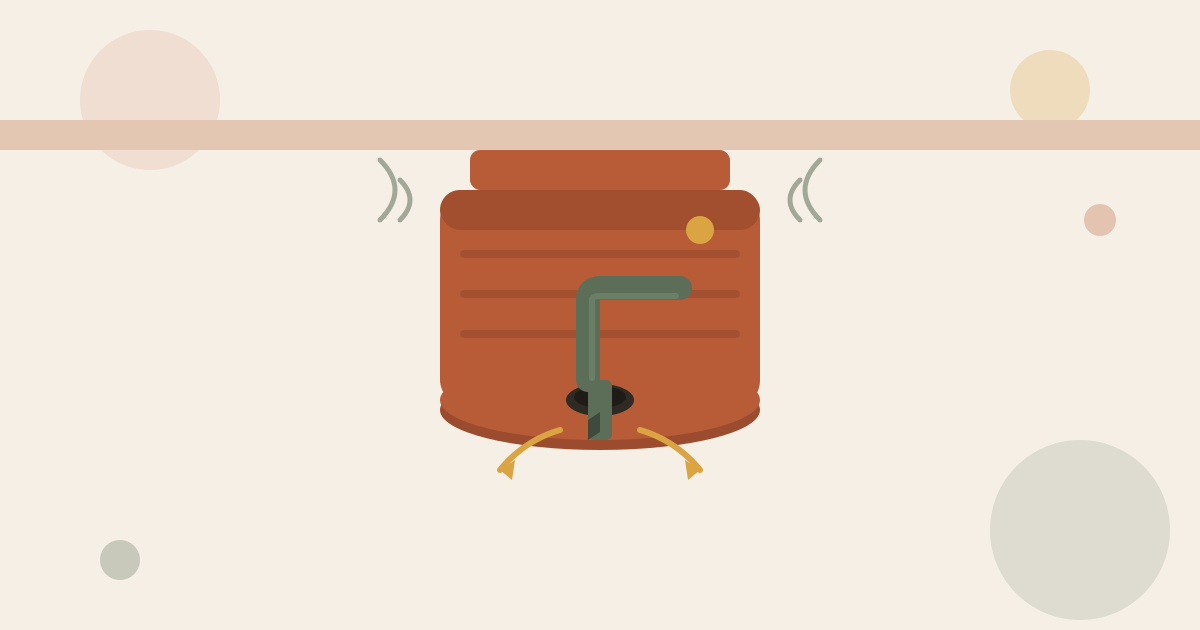
If there’s no hex hole on your model
Older or smaller disposals sometimes don’t have a bottom access hole. In that case, skip straight to using a disposal wrench or a broom handle: brace the wooden end against one of the impeller blades (visible from the top, with power off) and push firmly to rotate the plate and dislodge the jam. It’s less elegant than the Allen wrench method but works the same way.
If the reset button won’t stay in, or keeps popping back out
That’s a sign the motor is overheating or still meeting resistance when it tries to start. Don’t keep mashing the button — repeated resets without clearing the actual jam can strain the motor.
- Double-check the flywheel turns completely freely by hand, in a full circle, before resetting again.
- Give the motor 5–10 minutes to cool down if you’ve already tried resetting once or twice. Motors have a thermal overload switch that trips to prevent burnout, and it needs a cooldown period to reset properly.
- If it still won’t hold after a full cooldown and a confirmed clear flywheel, the motor’s internal overload switch itself may be failing — that’s a repair-or-replace decision.
If the disposal hums but the flywheel won’t budge even with a wrench
This points to something more stubborn than loose debris — often a buildup of hardened grease and food sludge acting like cement around the impeller, or a genuinely solid object like a bone or a broken glass piece wedged tight.
Try flushing the chamber with hot water and a squirt of dish soap first to loosen grease, then attempt the wrench again. If it still won’t turn after real effort, this is where it’s reasonable to stop forcing it — continuing to crank on a seized motor coupling can damage it further.
If the unit hums, spins freely by hand, but still won’t start under power
This is less common but points away from a mechanical jam and toward an electrical problem: a failing motor capacitor, worn-out motor bearings, or a wiring issue. If your disposal is more than 8–10 years old (typical lifespan for these units is roughly 8–12 years), this is often the sign that repair isn’t worth it — replacement disposals in the $80–$200 range are common, and labor to swap one in is usually straightforward for a plumber.
If it hums, then trips your breaker or GFCI outlet
A jam that draws too much current can trip a circuit breaker or a GFCI outlet under the sink, which will make the disposal seem completely dead rather than humming. Check both before assuming the worst:
- Reset the breaker at your panel.
- Check for a GFCI outlet under the sink (or on a nearby counter) and press its reset button.
- Then work through the jam-clearing steps above, since a breaker trip is often a symptom of the same jam, not a separate problem.
If it trips again immediately after clearing the jam and resetting, that’s a stronger sign of an electrical fault worth having a pro look at, rather than something to keep resetting repeatedly.
If this keeps happening every few weeks
A disposal that jams repeatedly usually has a habit problem, not a mechanical one. The most common repeat offenders are fibrous vegetables (celery, corn husks, onion skins), starchy foods like rice and pasta that expand, coffee grounds, and grease that congeals in the chamber. None of these are illegal to put down a disposal occasionally, but they’re the top causes of recurring jams.
Running cold water (not hot) while grinding helps solidify grease so it gets chopped and flushed rather than gumming up the blades. If jams are a monthly event, it’s worth simply keeping problem foods in the compost or trash instead.
When it’s time to call a pro instead of keep troubleshooting
Most humming disposals are a DIY fix, but a few signs mean it’s worth booking a plumber or appliance repair tech rather than continuing to poke at it:
- The flywheel won’t turn at all even after soaking and real effort with a wrench.
- The unit trips the breaker repeatedly even after a confirmed clear jam.
- You smell burning or notice scorch marks near the reset button.
- The unit is past its typical 10-year lifespan and now showing electrical symptoms, not just a jam.
For a broader gut-check on repair-versus-replace decisions generally, it’s the same logic covered in “How Do I Know If a Repair Is Actually Worth Calling a Pro For?” — age, cost of parts versus a new unit, and whether the fix is mechanical or electrical all factor in.
FAQ
Is it safe to put my hand in the disposal to clear a jam?
No — always cut power at the switch and unplug the unit under the sink first. Use tongs, pliers, or the flat end of a wrench to remove debris, never your fingers, even when you’re certain it’s off.
Why does my disposal hum but the sink also isn’t draining?
This is usually just the jam itself — a stalled impeller doesn’t grind or move water through, so standing water is a normal side effect, not a separate clog. Clear the jam first and check drainage again before assuming there’s a separate blockage further down the pipe.
Can I pour anything down the disposal to unstick it?
Hot water and a bit of dish soap can help loosen grease-based jams. Skip the vinegar-and-baking-soda combo often suggested online — it doesn’t do much for solid jams and won’t move a physically stuck impeller. For a hard object, mechanical clearing with a wrench is what actually works.
How long should a garbage disposal last before I expect problems like this?
Most residential units run reliably for roughly 8–12 years. Occasional jams from stray debris are normal at any age; frequent humming, repeated breaker trips, or a flywheel that won’t turn on an older unit usually means it’s nearing the end of its useful life.


Comments
Post a Comment