Why Does My Laundry Still Smell Musty After a Full Wash Cycle?
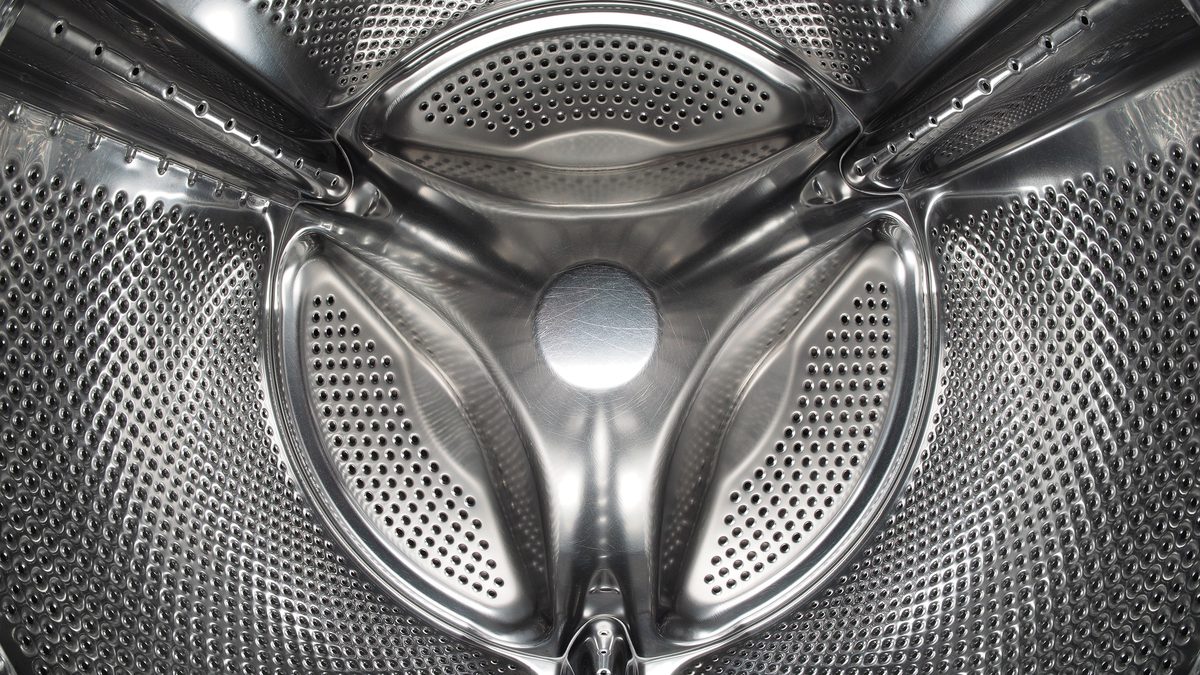
Photo: Petar Milošević via Wikimedia Commons (CC BY-SA 4.0) · license
If laundry smells musty the moment the cycle ends, the washer is the source: usually the door seal, the detergent drawer, or a drain filter holding water. If it smells fine out of the wash but sour after drying or once a towel gets damp again, the bacteria are in the fabric, and the fix is in how you wash and dry it.
Those two cases need different fixes, and generic advice can blur them. So can the standard “run a cup of vinegar through it” tip, which at least one major manufacturer warns against. Here’s how to tell which problem you have, then what each brand’s own instructions say.
First, notice when it smells
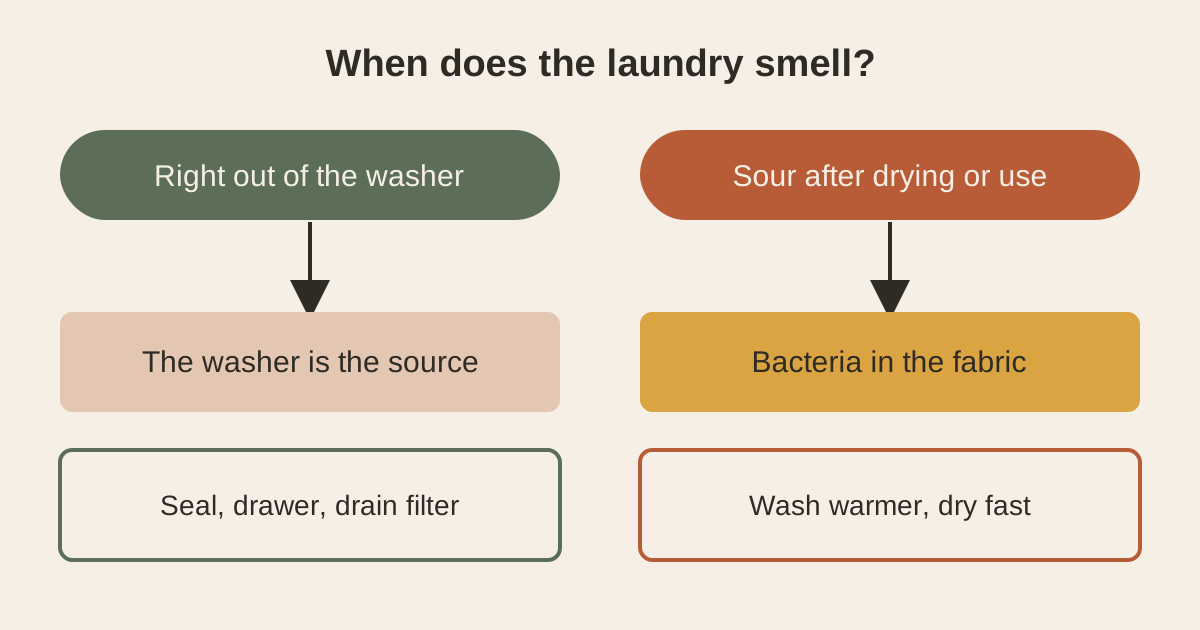
| When you notice it | Where the odor lives | Go to |
|---|---|---|
| The second you open the door, on every load | Washer: door seal, detergent drawer, drain filter | Cleaning the machine |
| Only on loads that sat in the drum for hours | Damp laundry sitting in a closed machine | Unload right away and rewash |
| Fine out of the wash and dryer, sour once the towel is used or damp again | Bacteria surviving in the fabric | Fixing the fabric |
| Both | Usually both. Clean the machine first, then fix the fabric | Both sections |
To check the machine on its own, wash a few towels you know are fresh, with no fabric softener, and smell them as soon as the cycle ends. A musty smell at that moment came from the washer.
Why the smell can survive a full wash and the dryer
Researchers writing in Applied and Environmental Microbiology (Kubota and colleagues, 2012) tracked down the source of the “wet-and-dirty-dustcloth” smell that people complain about in laundry. A bacterium, Moraxella osloensis, turned up in 87% of 30 smelly samples from 15 homes. It produces the main odor compound, and two of the study’s findings explain the frustration:
- It needs soil. The bacterium produced the odor compound on used towels but not on new ones. Soil left in the fabric is part of the recipe.
- It survives drying. It tolerated drying and UV light far better than E. coli or Staph aureus. The authors suggest that’s why it survives in laundry during and after drying.
It did not stand up well to the detergent surfactants the researchers tested. The authors also noted that low-temperature, gentle washing and drying favor its survival. So cold, gentle washes may help it hang on.
The same bacterium lives in washers. A study of 13 home machines (Jacksch and colleagues, 2019) found it relatively most abundant on the rubber door seal, detected in up to 9 door-seal samples. The detergent drawer had the widest mix of bacteria overall. Those two parts are where machine cleaning pays off.
Cleaning the machine: follow your brand, not a generic recipe
This is where generic advice can damage a machine. The three big brands don’t agree on what goes into a cleaning cycle.
| Whirlpool | Samsung | LG | |
|---|---|---|---|
| Cycle | Clean Washer | Self Clean / Pure Cycle | Tub Clean |
| How often | Every month | About once a month | Every 30 uses or when the display shows “tcL,” and monthly |
| What to add | affresh cleaner or liquid chlorine bleach | For odor, liquid chlorine bleach in the detergent compartment up to the max line, never straight into the drum | An oxygen-based washer cleaner |
| Avoid | Thickened, easy-pour, or no-splash bleach | Overdosing detergent or softener | Chlorine-based or acidic cleaners (may discolor or corrode the machine); high-foam cleaners (can leak) |
| Drain/pump filter | Check your manual | At least monthly or about every 40 washes | Monthly, with the tub clean |
Vinegar is acidic, so a cup of vinegar in the drum goes against LG’s Tub Clean warning (LG does allow diluted vinegar for wiping the gasket, below). For any other brand, the owner’s manual decides. If yours is lost, the maker’s support site usually has it by model number.
For a smell that’s already established, LG says to run Tub Clean once a week for 3 consecutive weeks. If the odor continues after multiple tub cleans, LG says the machine needs service.
The door seal
Pull the rubber lip back and look in the fold, especially at the bottom. LG says to clear foreign objects out of the groove at the six o’clock position, and notes that lint or hair in the gasket can trap water and cause mold and odor.
LG’s cleaning mix for the gasket is 3/4 cup (177 ml) of liquid chlorine bleach in 1 gallon (3.8 L) of warm or hot water, or vinegar instead. Never use the two together. Undiluted bleach can deteriorate the gasket over time. Samsung says to wipe inside the gasket folds and dry them completely.
Never mix chlorine bleach with vinegar or any other acid, or with ammonia. It releases toxic gas, as Poison Control warns. Use one, rinse thoroughly, and only then use the other.
The detergent drawer
Pull it out completely. Many have a release tab between compartments. Wash the tray and inserts with warm water and a soft brush, including the underside, then clean the cavity it slides into. Samsung puts this at about monthly, and Whirlpool says to clean it regularly following your manual.
The drain pump filter (front-loaders)
A clogged drain filter leaves water sitting in the drum, which LG says leads to odor over time. It’s usually behind a small panel at the bottom front.
- Turn the washer off and unplug it.
- If it just ran a hot cycle, let the water cool first, as Samsung advises.
- Put a shallow pan under the panel. If there’s a small drain hose, uncap it and let the water out first. There’s often more than you expect.
- Twist the filter counterclockwise to remove it, then clear lint and debris with a soft brush and warm water.
- Thread it back in until it stops turning, so it doesn’t leak.
Fixing the fabric when towels smell after drying
If your machine passes the fresh-towel test but towels still go sour after a use or two, treat the towels themselves. Each step below targets one of the conditions the research points to.
- Wash them warmer, within the care label. LG notes that in cold water, detergent may not fully dissolve, leaving buildup and odor. The washer study’s authors note that low-temperature washing helps microbes survive.
- Use the full detergent dose, not a heavy one. The bacterium didn’t tolerate surfactants well, so skimping on detergent may not help. Use HE detergent, as Whirlpool says, at the dose on the label. Extra detergent and softener leave residue, which Samsung lists as an odor cause.
- Add bleach where the fabric allows. The washer study’s authors point to earlier work recommending detergent with bleach or disinfecting agents to control laundry odor. For colors, that means an oxygen-type bleach labeled safe for them.
- Skip fabric softener on towels while you’re fixing the problem, since softener adds residue.
- Get them out and dry fast. Whirlpool’s instruction is to remove clothing as soon as possible after the cycle ends. Then dry them completely.
How often you wash them matters too. Our guide to how often bath towels need washing covers the schedule.
Habits that keep the smell from coming back
- Leave the door open between loads, as all three brands say. LG and Samsung add the detergent drawer.
- Unload right after the cycle ends.
- Run your brand’s cleaning cycle on its schedule from the table.
- Wipe the gasket folds when you see lint or water in them.
The same trapped-moisture logic explains why a dishwasher can smell even after you run it empty. If the smell is in the whole laundry room and not just the clothes, see our guide to finding a musty smell’s source room by room.
FAQ
Can I just run vinegar through my washer?
Check your manual first. LG specifically warns against acidic cleaners in its Tub Clean cycle because they may cause discoloration or corrosion, and it recommends an oxygen-based cleaner. Whirlpool and Samsung build their cleaning cycles around their own cleaner or liquid chlorine bleach. Never put vinegar and bleach in the same cycle or back to back without a rinse in between.
Bleach or a cleaner tablet?
Whichever your manufacturer names. Whirlpool’s cycle takes affresh or liquid chlorine bleach, but not the thickened or no-splash kind. Samsung’s odor routine uses liquid chlorine bleach in the detergent compartment. LG says to avoid chlorine-based cleaners and use an oxygen-based one.
Is it more common in front-loaders?
Front-loaders get most of the blame, and the door seal is the likely reason. It’s where the washer study found the odor bacterium relatively most abundant. Top-loaders typically have no door seal, but they still have a detergent area and standing-water spots, so the drawer cleaning and the fabric fixes apply to them too.
Sources
- Removing Odors or Smells, Front Load Washer (Whirlpool) — monthly Clean Washer cycle, bleach types to avoid, HE detergent, unloading promptly
- How to Clean the Tub and Front Load Washer Maintenance (LG) — 30-use interval, cleaners to avoid, 3-week routine, gasket mix, drain filter steps
- Odor Buildup Troubleshooting (LG) — cold-water detergent buildup, drain filter and odor
- How to Clean Your Samsung Washer (Samsung) — monthly cycle, bleach placement, 40-wash filter interval
- Moraxella Species Are Primarily Responsible for Generating Malodor in Laundry (Kubota et al., 2012) — the odor bacterium, soil requirement, survival through drying
- Bacterial Community Composition of Domestic Washing Machines (Jacksch et al., 2019) — door seal and drawer findings, low-temperature washing, bleach detergents
- Chlorine Gas (Poison Control) — never mix bleach with vinegar, acids, or ammonia
Written and reviewed by peter.bae for Hearth & Habit · Last reviewed October 11, 2026


Comments
Post a Comment