Musty Smell in the House? How to Find the Source, Room by Room
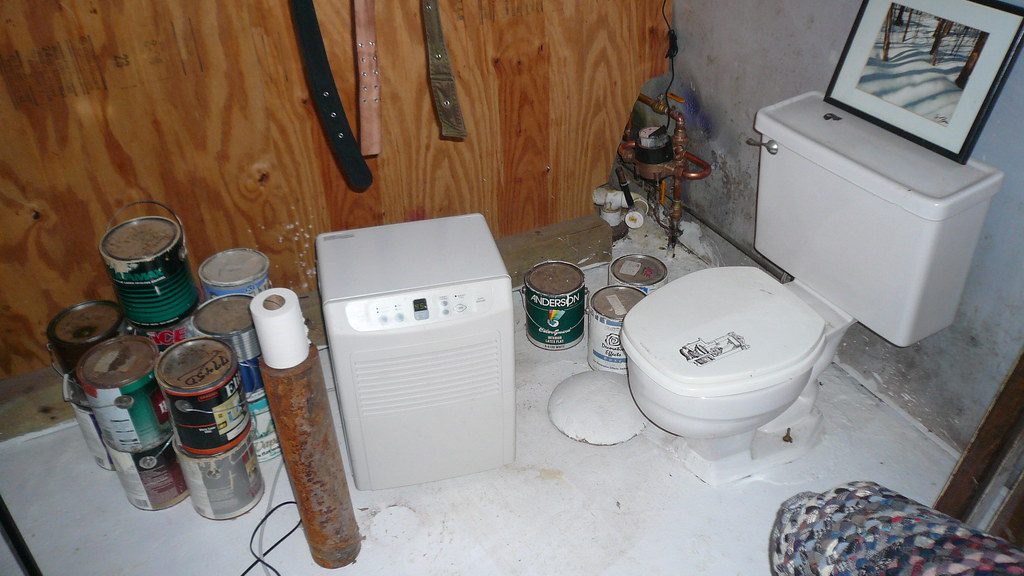
Photo: Rex Roof via Flickr (CC BY 2.0) · license
A musty smell usually means mold or mildew is growing on something damp, even if you can’t see it. Find the damp spot by sniffing closed spaces one at a time and checking humidity, then dry it out and keep the air below 60% relative humidity.
That smell is the useful part. The US Environmental Protection Agency (EPA) explains that growing molds release microbial volatile organic compounds (mVOCs), gases that go quickly into the air and can cause the “moldy odor” people notice. EPA’s guidance is that a moldy odor suggests mold is growing and should be investigated, visible or not. This guide covers how to follow that smell back to its source, what the humidity numbers mean, and why a test kit won’t help.
Step 1: Use your nose like an instrument
Close interior doors for a few hours so smells can build up, then walk the house and open closets, cabinets, and appliances one at a time. The first breath when a door opens tells you more than standing in the middle of a room.
The Minnesota Department of Health (MDH) describes mold odor as “musty or earthy,” and its advice is plain: if you see or smell mold, assume a problem exists.
Step 2: Measure the air, and read the number for the season
An inexpensive digital hygrometer shows relative humidity (RH), the amount of moisture in the air compared with the most it can hold at that temperature. EPA’s target is below 60%, ideally 30–50%. In cold-climate winters, the targets drop.
| Hygrometer reading | What it means | What to do |
|---|---|---|
| Below 60% everywhere, one room smells, source not yet found | A local source, like a leak, a damp wall, or trapped air | Search that room’s hiding spots (Step 3) |
| One room or closet well above the rest | Trapped, humid air or a damp surface in that space | Open it up to air, find the wet surface, dry it |
| Whole house above 60% | The air itself is too wet; scrubbing won’t keep up | Dehumidify (sizing below), vent moisture sources outside |
| Winter, cold climate, condensation on windows | Humidity is too high for the season | ENERGY STAR: aim for 30–40% in the heating season; MDH says 20–40% in winter |
| Under 60%, the space dried, smell still there | Possibly a hidden leak or damp material | Look for hidden leaks, or call a pro (Step 5) |
If the whole house runs high, EPA’s prevention list includes the moisture you add. Vent clothes dryers, stoves, and other moisture-producing appliances outside where possible. Insulate cold water pipes, which collect condensation.
Sizing a dehumidifier
ENERGY STAR sizes dehumidifiers by how damp the space is before you start, measured in pints of water removed per day:
| Condition before dehumidifying | Space under 2,000 sq ft | Space over 2,000 sq ft |
|---|---|---|
| Slightly to moderately damp (50–75% RH) | 20–30 pints/day | 30+ |
| Very damp (75–90% RH) | 25–40 pints/day | 40+ |
| Wet (90–100% RH) | 30–50 pints/day | 50+ |
ENERGY STAR advises choosing a larger unit rather than a smaller one. Its certified models use 20% less energy than conventional units that remove the same amount of moisture.
For a dehumidifier to work, keep the doors and windows to that space closed. Set it away from walls and furniture. If you drain it with a hose to a floor drain or sump, keep the hose away from electrical cords and plug the unit into a grounded outlet.
Step 3: Check where mold hides
EPA says mold may be hidden on the back side of drywall, wallpaper, or paneling, on top of ceiling tiles, under carpet pads, around pipes, inside walls, and in ductwork. MDH adds the spaces under vinyl flooring and inside sink cabinets. Here’s how that maps onto a room-by-room search:
- Kitchen and bathrooms: inside the sink cabinets, especially the back wall and floor of the cabinet, and around the supply and drain pipes.
- Closets: the floor and back corners, especially on an exterior wall or one shared with a bathroom. Our musty closet guide covers emptying, drying, and airing the space.
- Basement: cool concrete walls, carpet and pad laid over concrete, and any spot that darkens after rain. If the smell peaks on muggy days instead of after storms, humidity is more likely than a leak. The summer basement checklist shows how to tell them apart.
- Ceilings: stains or old water marks, with ceiling tiles checked from above. A yellow-brown ceiling stain can mean wet material above it.
- Appliances that hold water: the washer’s door gasket and detergent drawer, the dishwasher filter, and the fridge’s door gasket and drip pan. If laundry comes out musty, the washer is often the source. A fridge smell tells you where to clean, not whether food is safe. Food safety is judged by time and temperature.
- Towels: a towel reused while still damp sours quickly. Hang towels spread out rather than bunched on a hook.
Don’t peel or pry to look. EPA warns that removing wallpaper over suspected growth can release a massive amount of spores. If the smell points inside a wall or under flooring, that’s a job for a professional.
Step 4: Skip the test kit
A mold test can’t tell you much you need. EPA says no EPA or other federal limits have been set for mold or mold spores, so a test result can’t show whether your home “passes.” If mold is visible, EPA says sampling is unnecessary in most cases.
MDH puts it more bluntly: testing should never be a substitute for a good visual inspection. Spend the test-kit money on a hygrometer and a flashlight. Where EPA says sampling may help is after a cleanup, to confirm the area was cleaned adequately.
Step 5: Clean what you can, and know when to stop
Here’s the order of work, drawn from MDH and EPA.
- Fix the moisture source first. MDH says to fix the moisture source first.
- Dry wet materials within 24–48 hours. EPA’s window for keeping mold from starting.
- Discard porous materials with mold growth, such as carpet, drywall, and insulation (MDH). Hard, nonporous surfaces can be cleaned.
- Clean hard surfaces. Detergent and water first. If you use bleach, MDH’s dilution is 1/4 to 1/2 cup per gallon of water.
Never mix bleach with ammonia or with acids such as vinegar and many toilet-bowl or lime-scale cleaners. The mix releases toxic chlorine or chloramine gas. Use one product, rinse with plain water, and keep the room ventilated.
The EPA says a homeowner can usually clean mold covering less than about 10 square feet, roughly a 3-by-3-foot patch. Larger areas, mold in HVAC ducts, or mold after sewage or other contaminated water call for a professional. A smell that lingers after humidity has stayed below 60% for a while is also worth a professional look, since the source may be hidden.
FAQ
My hygrometer reads 55%. Is that a problem?
It’s under EPA’s 60% line but above the ideal 30–50% range. If there’s a musty smell, bringing it down is worth doing. In a cold-climate winter, 55% is high. ENERGY STAR recommends 30–40% in the heating season to prevent window condensation.
Are the musty smells themselves harmful?
EPA says the health effects of breathing mVOCs are largely unknown. The smell matters more as a sign that mold is growing. Treat it as the clue that leads you to the damp spot.
Sources
- Mold Course, Chapter 1 (US EPA) — mVOCs as the source of musty odor; a moldy odor should be investigated
- A Brief Guide to Mold, Moisture, and Your Home (US EPA) — hidden mold locations, wallpaper caution, humidity below 60%, 24–48 hour drying, venting and pipe insulation
- Mold Testing or Sampling (US EPA) — no federal mold limits; sampling usually unnecessary
- Mold and Moisture in Homes (Minnesota Department of Health) — musty or earthy odor, testing vs. inspection, winter humidity, bleach dilution, discarding porous materials
- Dehumidifiers (ENERGY STAR) — sizing chart, 20% energy savings, 30–40% winter target, placement and drainage safety
- Mold Cleanup in Your Home (US EPA) — the roughly 10-square-foot DIY limit and when to call a professional
- Chlorine Gas (Poison Control) — why bleach never gets mixed with ammonia or acids
Written and reviewed by peter.bae for Hearth & Habit · Last reviewed October 11, 2026


Comments
Post a Comment