How Do You Store Summer Clothes So They Don't Smell or Yellow by Spring?
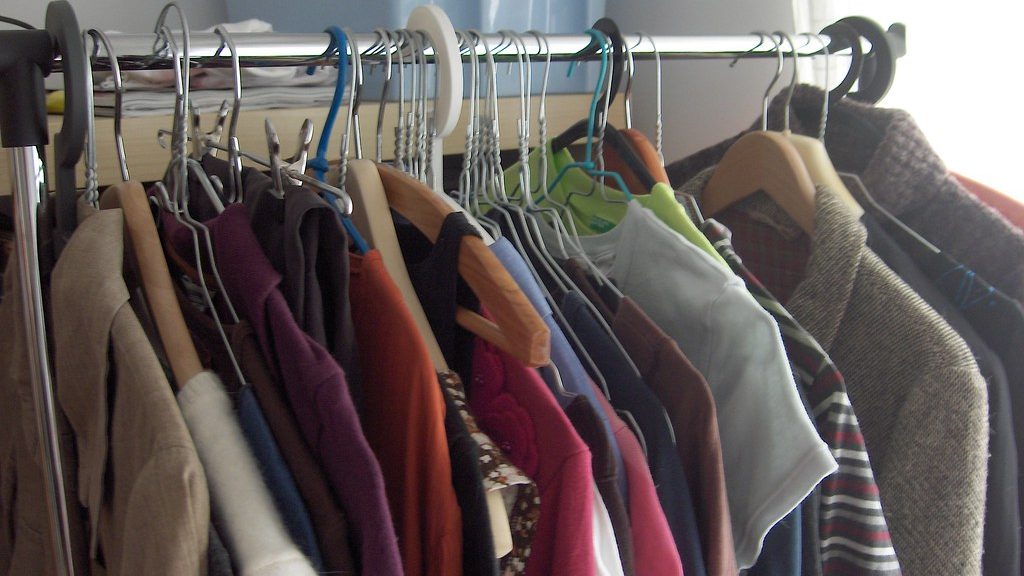
Photo: Sofy Marquez via Flickr (CC BY 2.0) · license
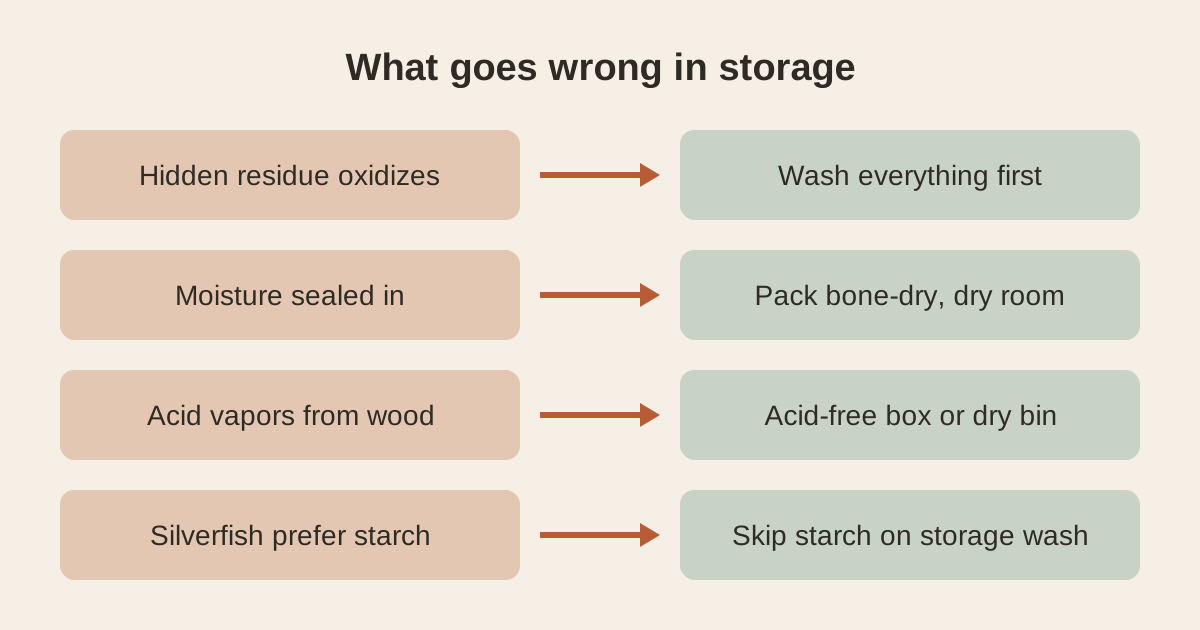
Wash everything before it goes away, including pieces that look clean, then pack it completely dry in a container that suits it, away from the attic, basement and garage. Most yellow spots start as invisible residue that oxidizes in storage, and a musty smell points to moisture.
Most packing guides stop at “wash first and avoid plastic.” That advice is half right. Some plastics are acceptable and some aren’t. Cedar does less than its reputation. And the summer fabrics you’re packing (cotton, linen, rayon) have their own pest, which isn’t the clothes moth. The steps below follow the order you’d actually pack in. Step 3 covers where to keep the clothes, and the table in step 4 rates each container by what conservators and extension entomologists say happens to fabric in it.
Why clean-looking clothes come out yellow
Clorox explains that the yellowing on stored clothes is oxidation: oxygen in the air slowly reacts with residual stains left in the fabric after washing. Those stains can look gone when you pack, then turn yellow or brown over months or years. Clorox says these leftover stains often have a protein component that needs to be removed.
FabricLink’s storage guide adds that many foods and beverages leave yellow stains as they age, and that those stains can attract insects. So a T-shirt worn once to a barbecue isn’t “clean enough to store,” even if it would be fine to wear again tomorrow. If you’ve been holding worn-once pieces on a chair, our guide to clothes you wore once but aren’t dirty yet covers that habit. Storage day is when those pieces go in the wash.
Step 1: Wash everything, and leave out the extras
Launder or dry-clean every piece you’re putting away. FabricLink’s seasonal storage guidance says to avoid five things on the storage wash: soap, chlorine bleach, starch, garment sizing and fabric softener. Rinse thoroughly. If something feels stiff without softener, add it after you unpack.
Starch matters more for summer clothes than for winter ones. University of Florida entomologists note that silverfish prefer starchy materials, and University of Maryland Extension says the silverfish’s preferred fabric is linen, though it may also feed on silk, rayon and cotton. Maryland lists yellowish stains on linens among the signs of silverfish damage, so not every yellow mark in spring is oxidation.
Clothes moths are the bigger risk for wool. Utah State University Extension says they favor items stained with beverages, oil and sweat, and that wool blended with cotton is at risk too. If you’re packing a light wool cardigan or a blended summer suit, the pre-storage wash helps remove what draws them.
Step 2: Make sure everything is completely dry
The Canadian Conservation Institute (CCI), part of the Government of Canada, says textiles should be clean and dry before storage. Excess humidity leads to mold and mildew. Give thick items extra time on a drying rack before they go in.
If your laundry already smells sour coming out of the washer, fix that before you pack. Our guide to laundry that smells musty after a full wash walks through the washer-side causes.
Step 3: Pick the room before the box
Where the container sits matters as much as what it is. Here’s what the sources say about three common spots:
- Attic: FabricLink says to avoid its heat. North Carolina Historic Sites says unfinished attics see the greatest swings in temperature and humidity.
- Unfinished basement: FabricLink warns about its moisture, and North Carolina Historic Sites flags the same swings. Maryland Extension notes that silverfish prefer damp, cool places such as basements and laundry rooms.
- Garage: FabricLink says to avoid the grease and fumes.
That leaves a closet or shelf in the lived-in part of the house, as long as it stays dark and dry. North Carolina Historic Sites gives the ideal for textiles as a constant 68°F to 75°F at 40% to 57% relative humidity. The US EPA’s guidance for limiting mold is to keep indoor humidity below 60%, ideally 30–50%. Where those two ranges overlap is a simple target:
- Textile range: 40–57%
- EPA’s ideal: 30–50%
- Overlap: the higher of the two lower limits (40%) to the lower of the two upper limits (50%) = 40–50% relative humidity
A humidity gauge on the closet shelf tells you whether you’re in that band. If the closet already smells musty, see why a closet smells musty even when everything looks clean before you load it up.
Step 4: Choose the container with this table
This table is built from what CCI, North Carolina Historic Sites, FabricLink and Utah State University Extension each say about the container. Where they disagree, both views are shown.
| Container | What the sources say | Verdict for summer clothes |
|---|---|---|
| Dry-cleaning bag or other thin plastic bag | FabricLink: no air circulation, moisture collects, mildew may form. NC Historic Sites: plasticizers can harm fibers and change dye colors. | Don’t use |
| Plastic garment bag | CCI: no air circulation, which encourages moisture to build up | Don’t use |
| Lidded polyethylene bin | CCI: polyethylene boxes are fine for storage. NC Historic Sites: don’t store textiles in plastic tote boxes, since plastic can trap moisture. Utah State: an airtight container keeps egg-laying moths out. | Acceptable per CCI, only for clothes that go in clean and fully dry; pick acid-free boxes for anything you’d hate to lose |
| Ordinary cardboard box | CCI: avoid regular paper and cardboard | Avoid |
| Acid-free cardboard box | CCI: fine for storage | Good |
| Wooden drawer or cedar chest | CCI: avoid wood and wood products; wooden drawers can emit acidic vapors that yellow fabric and make it brittle. NC Historic Sites: no direct contact with wood, including cedar chests. | Avoid where you can. If you must, a liner only prevents direct contact; it isn’t shown to block the vapors. |
| Suitcase | FabricLink: works as a temporary container | Fine short-term |
| Clean pillowcase or cotton sheet wrap | FabricLink: pack with white tissue or clean sheets and pillowcases. NC Historic Sites: a white or light sheet wraps textiles against light and dust. | Good inside a box or bin |
A bin’s lid cuts both ways. Utah State says an airtight container keeps egg-laying moths out, and North Carolina Historic Sites says plastic can trap moisture. Whatever goes into a closed bin damp stays damp, which is why step 2 comes first.
Don’t count on cedar for pest control. Utah State University Extension says cedar-lined closets and chests have limited value against clothes moths.
Mothballs are a different matter. Utah State notes naphthalene moth products are toxic and should be used with caution. If you use them, follow the product label exactly. FabricLink says to suspend them in a mesh bag at the top of the storage container, never letting the clothes touch the bag, and to avoid inhaling the vapors, which may be toxic to people.
Step 5: Pack loosely
- Don’t overstuff. FabricLink says not to overstuff the container, and CCI advises against stacking many textiles on top of each other.
- Fold as little as you can, on the seams. That’s FabricLink’s advice. CCI suggests padding unavoidable folds with acid-free tissue or muslin.
- Keep it dark. FabricLink says stored items shouldn’t be exposed to sunlight or artificial light.
- Vacuum the shelf or closet floor first. FabricLink recommends cleaning the storage area before the clothes go in.
Step 6: Check once mid-season, then air everything out
North Carolina Historic Sites recommends checking closets and storage boxes seasonally for insects. For clothes packed in fall, that means at least one look over the winter. Check for:
- holes or grazed spots on wool, which CCI lists as insect damage to look for
- feeding marks, scales or yellowish stains on linens, which Maryland Extension lists as signs of silverfish
- condensation or a damp smell inside a bin, which may mean something went in wet or the room is too humid
If you find live larvae, Utah State says freezing infested fabric for a few days kills eggs and larvae. CCI’s version is a week in a bag in a freezer that holds -4°F (-20°C). That bag is for the freezer trip only, not for storage.
When you unpack in spring, FabricLink says to air the clothes out thoroughly before they go back in the closet.
If spring clothes already have yellow spots
Check the care label first. Clorox’s method for set-in oxidation stains is a presoak in hot water with its Clorox 2 for Colors, one scoop per 2 gallons. Sort colors first. Whites can soak up to 8 hours and darker items about 1 hour. Then wash in the hottest water the care label allows, air-dry, and inspect. Clorox says to repeat the treatment if needed.
The short version
Wash everything without starch or softener, dry it completely, and put it in an acid-free box, or a polyethylene bin if it’s bone-dry. Keep it in a closet in the living space, ideally at 40–50% humidity, and look it over at least once during the winter. Residue left in the fabric and moisture sealed in with it are the two main problems this routine is built to stop.
Sources
- Getting Rid of Yellow Oxidation Stains | Clorox — why residual stains yellow in storage; presoak times and wash steps
- Seasonal Storage | FabricLink — products to skip, places to avoid, plastic bags, packing, mothball placement, airing out
- Basic care – Textiles | Canadian Conservation Institute — clean and dry before storage; polyethylene and acid-free boxes; garment bags, wood and cardboard; freezer treatment
- Caring for Your Textiles | North Carolina Historic Sites — 68–75°F and 40–57% humidity; attics and basements; wood contact; plastic totes; seasonal checks
- Clothes Moths | Utah State University Extension — stained fabrics attract moths; cedar’s limited value; airtight containers; freezing; naphthalene toxicity
- Silverfish and Firebrats | University of Maryland Extension — linen, silk, rayon and cotton; damage signs; damp, cool places
- Silverfish (EENY-705) | University of Florida IFAS Extension — preference for starchy materials
- A Brief Guide to Mold, Moisture and Your Home | US EPA — indoor humidity below 60%, ideally 30–50%
Written and reviewed by peter.bae for Hearth & Habit


Comments
Post a Comment