Why Is My Electric Bill So High? A Step-by-Step Checklist to Find the Cause
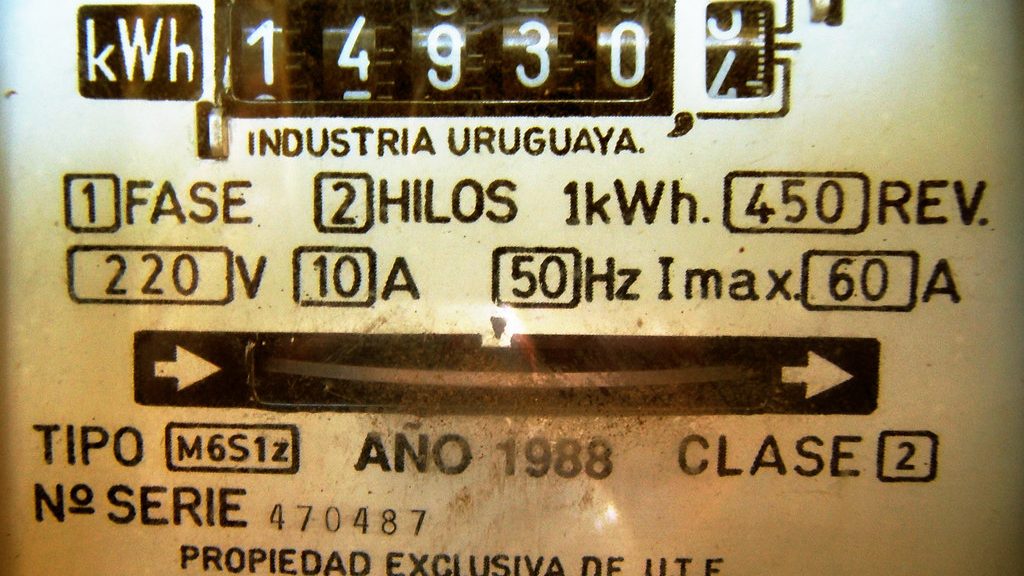
Photo: Vince Alongi via Flickr (CC BY 2.0) · license
A high electric bill comes from one of three places: the bill covers more days (or catches up on an estimated reading), you paid more per kilowatt-hour, or the house used more kilowatt-hours per day. Three divisions on your bill tell you which one, before you unplug anything.
A lot of advice skips straight to “check your appliances.” That wastes an afternoon if the real cause is a 33-day billing period or a rate change. Work the checks below in order. Each one rules out a whole group of causes.
Step 1: Check the billing period and the reading type
Not every bill covers a month. SaskPower says a typical bill covers 28 to 33 days, and a first bill can run anywhere from 16 to 45 days. Manitoba Hydro’s own sample bill runs July 14 to August 15, which is 32 days. A 33-day bill after a 28-day bill is several extra days of usage before anything in the house changed.
Next, find the reading type, usually printed beside the meter numbers. Manitoba Hydro lists three: actual, estimated (based on last year’s use), and customer-submitted. Estimates can produce a “spike.” If last winter was milder than this one, the estimates run low. The next bill with an actual reading then charges for the shortfall, so one bill looks huge while the estimated ones before it looked cheap.
If you see “estimated” on the previous bills, add them together with the current one and compare the total with the same months last year. The spike may shrink into a normal season.
Step 2: Turn the bill into three numbers
Take this bill and the same bill from a year ago (not last month, which can have different weather). For each, work out:
- kWh per day = kWh used ÷ billing days
- Price per kWh = total dollars ÷ kWh used (an all-in figure, fees included)
- Degree days per day, which measures the weather (explained below)
Worked example
These figures are hypothetical, so swap in your own.
| Last January | This January | |
|---|---|---|
| Billing days | 30 | 33 |
| kWh used | 1,050 | 1,386 |
| Total bill | $178.50 | $249.48 |
| kWh per day | 1,050 ÷ 30 = 35 | 1,386 ÷ 33 = 42 |
| Price per kWh | $178.50 ÷ 1,050 = $0.17 | $249.48 ÷ 1,386 = $0.18 |
The bill rose by $70.98. Here is where that money came from:
- Extra days: 3 days × 35 kWh × $0.17 = $17.85
- Higher price: 1,386 kWh × $0.01 more per kWh = $13.86
- More use per day: 7 more kWh a day × 33 days × $0.17 = $39.27
Those three add up to $70.98. Only the last $39.27 is about anything happening in the house. In this example, a quarter of the increase came from the calendar and about a fifth from the price.
For context, EIA puts the 2025 US average residential price at 17.30 cents per kWh. It also notes that prices are usually highest in summer, when total demand is high. Your rate can rise in July even if nobody touched the AC.
If your price per kWh jumped and kWh per day didn’t, you have a pricing problem, not an appliance problem. Our guide to a bill that doubled with no change in usage covers rate changes, expired fixed-rate plans, and what to ask the utility.
Step 3: Adjust for the weather with degree days
“It was colder” is a guess. Degree days turn it into a number. The US Energy Information Administration (EIA) defines them against a 65°F base:
- Average the day’s high and low to get the mean temperature.
- Heating degree days (HDD): 65 minus the mean, on days the mean is below 65°F. A day with a high of 33°F and a low of 25°F has a mean of 29°F, so 65 − 29 = 36 HDD.
- Cooling degree days (CDD): the mean minus 65, on days the mean is above 65°F. A 90°F high and 66°F low give a mean of 78°F, so 78 − 65 = 13 CDD.
Add up the daily values for each billing period and divide by the billing days. Then compare the percentage change with your kWh-per-day change.
Continuing the hypothetical: say last January’s period totaled 900 HDD (900 ÷ 30 = 30 per day) and this one 1,155 HDD (1,155 ÷ 33 = 35 per day). Daily heating demand rose by 5 ÷ 30, about 17%. Daily use rose by 7 ÷ 35 = 20%. In a home that heats with electricity, that is close enough that weather is a plausible main cause. If kWh per day had risen 20% while degree days stayed flat, something else is likely drawing power.
This matters more than it seems. EIA reports that in 2020, air conditioning was 19% of US home electricity use, and space heating and water heating were 12% each. Manitoba Hydro says heating and cooling together can be more than 60% of a home’s energy use in its climate. The colder or hotter your climate, the more your bill follows the degree days.
Step 4: If you have a heat pump, check the backup heat
This cause is easy to miss. Many heat pumps carry a backup heater, often electric resistance “strip heat.” The thermostat may call it “aux” or “emergency” heat.
Backup heat is there for when the heat pump alone can’t keep up. The Department of Energy’s building-science training material notes that it can also come on after a raised setpoint: when you turn the thermostat up and the heat pump takes a long time to get there.
That trigger turns ordinary advice upside down. For many homes, DOE’s setback advice holds: turning the thermostat back 7–10°F for 8 hours a day can save up to about 10% a year on heating and cooling. On a heat pump, though, the DOE material says the morning recovery from a night setback can activate auxiliary heat and “negate the efficiency gains.” It notes that it is often recommended to set the thermostat at one temperature and leave it alone.
The same material says typical heat pumps have a COP of 2 to 5. COP (coefficient of performance) is heat delivered per unit of electricity. Energy Trust of Oregon says resistance strips use “substantially more energy” than the heat pump.
What to check:
- The thermostat mode. It should say Heat, not Em Heat or Emergency.
- The aux indicator or runtime report, if your thermostat shows when aux heat is on. Aux heat running on a mild day after a setback points to the cause.
- The lockout setting. DOE’s material says many codes require controls that keep auxiliary heat off until it’s colder than a set outdoor temperature, commonly around 35°F. Energy Trust of Oregon’s 2025 contractor specifications require it to be set at or below 35°F. If yours has no lockout, or it’s set high, ask your HVAC contractor to review it. It’s an installer setting, not something to dig into yourself.
The thermostat settings guide covers setback advice for other system types.
Step 5: Find the device that won’t shut off
If kWh per day rose and degree days don’t explain it, look for one piece of equipment running when it shouldn’t. SaskPower names the first four suspects below as equipment faults behind large bills; the last row is a common added load. The “how you’d notice” column is general guidance.
| Suspect | What’s going wrong | How you’d notice |
|---|---|---|
| Electric water heater | A leak keeps it reheating fresh cold water | Water around the base, or the heater runs at times nobody uses hot water |
| Thermostat | Broken, so heating or cooling won’t stop | House is warmer or cooler than the setting |
| Well pump | Runs continuously | Pump cycles or hums with no taps open |
| Fridge or freezer | Broken door seal lets cold air out | Gasket torn or not sealing, frost buildup, compressor running constantly |
| Space heater | A new or forgotten load that wasn’t there last year | Use jumps on the days it’s plugged in, even mild ones |
If your utility shows hourly data, look at the middle of the night. That is when the house is mostly running only what never turns off. A night baseline that has climbed since last year can point to one of the suspects above.
To price a single device, use the DOE formula: watts × hours used ÷ 1,000 × price per kWh. The space heater cost breakdown works it through for the most common winter add-on. The guide to which appliance is quietly using the most electricity ranks the rest.
Step 6: If the numbers still don’t add up, ask for a meter test
If the billing days, price, weather, and equipment all check out, the meter itself is worth questioning. The rules vary by state. Maryland’s Public Service Commission is one clear example:
- Contact the utility first. It is “required by law to assist you.”
- On request and at no charge, the utility must test your meter’s accuracy, though it doesn’t have to do so more than once in 18 months.
- If you’d rather not rely on the utility’s test, you can ask the commission for a “referee test” for $10. The fee is refunded if the meter falls outside the 98%–102% accuracy range.
- An estimated reading must be marked on the bill. If an estimate is far out of line, you can ask the utility to cancel it, but the next bill will then cover two months.
Keep the limit of this route in mind: a meter test only checks whether usage was recorded accurately. It doesn’t explain what used the power. Steps 1 through 5 do that.
Outside Maryland, search your state utility commission’s site for “billing dispute” or “meter test” to find the local rule and any fee.
Quick decision table
| What your three numbers show | Most likely cause | Next step |
|---|---|---|
| More billing days, kWh per day steady | The calendar | Compare kWh per day, not totals |
| Earlier bills estimated, this one actual | Catch-up from low estimates | Add the bills together and compare the season |
| Price per kWh up, kWh per day steady | Rate, plan, or seasonal pricing change | Call the utility and ask which one |
| kWh per day up about as much as degree days | Weather | Thermostat strategy, insulation, sealing |
| kWh per day up more than degree days, on a heat pump with aux heat running on mild days | Backup strip heat | Stop deep setbacks; have the lockout checked |
| kWh per day up, degree days flat | A device that won’t shut off | Night baseline, then the suspect table |
| Everything checks out | Possibly the meter | Ask for a meter test |
FAQ
My bill is high but the weather felt normal. Where do I start?
Start with Step 1. A longer billing period or a catch-up from estimated readings can raise a bill with no change in weather or habits. Then check the price per kWh before looking for a device.
Can I just turn the heat pump to emergency heat when it’s very cold?
Not as a routine cold-weather setting. ElectriCities of North Carolina says emergency or AUX mode is electric resistance heat that can significantly increase your bill compared with regular Heat mode, and to switch to emergency heat manually only if the heat pump is malfunctioning. If you’re switching to emergency mode because the heat pump isn’t heating, have it serviced rather than running on strip heat for weeks.
Does a second fridge in the garage matter?
It can, and broken door seals make it worse. SaskPower lists bad fridge and freezer seals among the equipment problems behind large bills. Price it with the watts × hours formula, or measure it with a plug-in watt meter.
Sources
- Why is my bill higher than normal? | SaskPower — 28–33-day billing periods, catch-up after estimates, and equipment faults (water heaters, thermostats, well pumps, fridge seals)
- Reasons for a high bill | Manitoba Hydro — reading types, low estimates after a milder winter, heating and cooling share
- Degree days | U.S. EIA and Electricity use in homes | U.S. EIA — degree-day method and worked examples; 2020 end-use shares
- Electricity prices and factors affecting prices | U.S. EIA — 2025 average residential price and higher summer prices
- Introduction to Heat Pumps lecture notes | DOE Building Science Education Solution Center — aux heat after a setback, the 35°F lockout, heat pump COP
- Auxiliary heat lockout settings | Energy Trust Insider — lockout at or below 35°F; strip heat uses more energy
- Billing Disputes FAQ | Maryland Public Service Commission — free meter test on request, referee test, accuracy range, estimated bills
- Understanding Emergency Heat | ElectriCities of North Carolina — emergency/AUX heat is resistance heat that can significantly raise the bill; switch to it manually only if the heat pump is malfunctioning
- Programmable Thermostats | DOE Energy Saver — 7–10°F setback for 8 hours a day saves up to about 10% a year
Written and reviewed by peter.bae for Hearth & Habit · Last reviewed October 11, 2026


Comments
Post a Comment