Why Does My Furnace Smell Like Burning Dust the First Time I Turn It On?
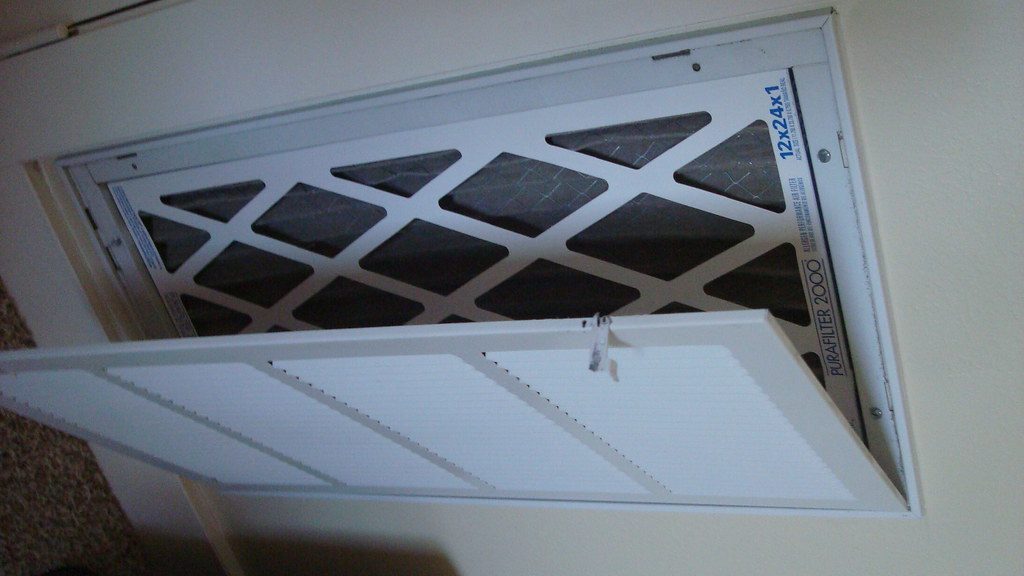
Photo: HomeSpot HQ via Flickr (CC BY 2.0) · license
It’s usually dust that settled on the burner and heat exchanger over the summer burning off, and it should fade as the system runs. Carrier puts that first-run odor at about 30 minutes to a few hours, and says a smell that lasts longer or gets stronger needs investigating.
The word that matters is fades. A dust smell gets weaker with each minute of run time. A smell that holds steady, grows, or smells like something other than hot dust is a different problem. And none of it tells you anything about carbon monoxide, which the CDC describes as odorless and colorless.
The steps below take you from the first whiff to a decision, with a checkpoint table for the first few hours and a smell-by-smell guide for the cases that aren’t dust.
Step 1: Rule out gas before anything else
Before you wait out any smell, make sure it isn’t gas. Utilities add an odorant called mercaptan to natural gas so it smells like sulfur or rotten eggs. Enbridge Gas also lists hissing or whistling near the meter, pipes, or appliances as a warning sign.
If you smell rotten eggs, Enbridge says to leave immediately. Don’t spend time shutting anything off on your way out. Specifically:
- Don’t use phones, switches, or electronics inside.
- Don’t turn lights or appliances on or off, and don’t start a car nearby.
- Leave doors and windows open behind you only if that costs you no time.
- Don’t go looking for the leak.
- Once you’re safely away, call your gas utility’s emergency line or 911.
If it’s clearly a hot, dusty, scorched smell and nothing like eggs or sulfur, move on to step 2.
Step 2: Let it run and watch the direction
Trane’s advice when you suspect dust is to let the unit run for about 10 minutes. You can look at the furnace, but Trane says not to touch it. If the odor persists or worsens, Trane says to turn the unit off and get an HVAC professional.
The two manufacturers give different time limits, so it helps to see them side by side:
| Checkpoint | What the source says | If the smell hasn’t let up |
|---|---|---|
| About 10 minutes of run time | Trane: let the unit run about 10 minutes when you suspect dust; look, but don’t touch | Trane: if it persists or worsens, turn the unit off and call an HVAC professional |
| About 1 hour | Trane: get professional help if a burning smell persists over an hour despite your troubleshooting | Call a technician |
| A few hours | Carrier: the season’s first dust odor can last about 30 minutes to a few hours | Carrier: a smell that persists beyond a few hours should be investigated |
| Any time it gets stronger | Carrier: a smell that becomes stronger should be investigated | Trane: turn the unit off and call an HVAC professional |
Carrier and Trane draw the line at different times. Trane’s is the more cautious: if the smell hasn’t eased after about 10 minutes, it says to turn the unit off and call a pro. Carrier allows a normal first-run dust smell up to a few hours. Both treat a smell that gets stronger as a reason to act.
Step 3: Check where the smell is coming from
Walk the house while the system runs. If you can pin the burning smell to one room, Trane says to access that room’s vent and safely remove any object stuck there. Do it with the heat off. If the smell doesn’t clear, or it gets stronger, go back to Trane’s rule: turn the unit off and call a professional.
Trane also notes that pet hair and dander can build up, heat up, and smell like burning.
Step 4: Swap the filter if it’s been a while
ENERGY STAR says to check the filter every month, especially in heavy-use months like winter, and change it at least every 3 months. Trane links a musty smell to dirty filters or clogged vents. If you can’t remember the last change, the start of heating season is a natural time to put in a fresh filter.
Turn the system off at the thermostat before you pull the filter. Our furnace filter guide covers sizes, MERV ratings, and which way the arrow points. If filters keep loading up fast, see what a filter that turns gray in two weeks is telling you.
Step 5: Match the smell to what it means
If it doesn’t smell like plain hot dust, this table maps each smell to what Carrier, Trane, and Enbridge say it can mean and what to do.
| What you smell | What it can mean | What to do |
|---|---|---|
| Hot, dusty, scorched, fading | Dust burning off the burner and heat exchanger (Carrier) | Let it run and follow the checkpoint table above |
| Burning smell from one room only | Possibly an object stuck in that room’s vent (Trane) | Heat off, then remove it if you can do it safely. If the smell stays, call a technician. |
| Chemical smell like burning plastic during a newly installed furnace’s first hours of use | The manufacturing process and protective coatings on parts (Trane) | Run it a few hours with windows open. Contact the installer if it doesn’t fade after several hours of use, and turn it off if it gets stronger. |
| Electrical or burning-wire smell, or burning plastic that isn’t a new furnace’s first hours | Faulty wiring, an overheating blower motor, or another electrical issue (Carrier); a severe electrical problem (Trane) | Turn the system off and call a licensed technician (Trane, Carrier). Carrier says not to diagnose electrical or combustion problems yourself. |
| Oily smell from an oil furnace | An oil leak, burner trouble, or a heat exchanger failure (Carrier) | Have it inspected by a qualified professional |
| Musty or moldy | Dirty filters or clogged vents (Trane), or mold or mildew in the ductwork or the cooling coil that sits on the furnace (Carrier) | New filter first. If it stays, have the ducts and coil looked at. |
| Rotten eggs or sulfur, or hissing near gas lines | Possible gas leak (Enbridge Gas, Carrier) | Leave now and call from outside (step 1) |
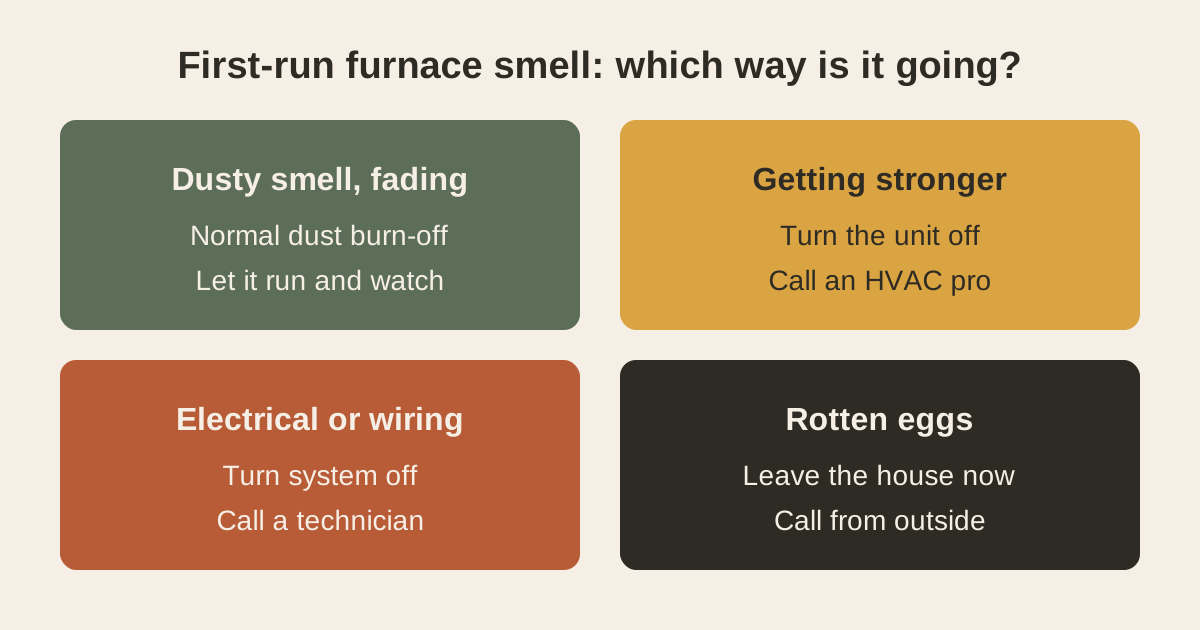
If the musty smell isn’t coming from the vents at all, our room-by-room guide to finding a musty smell can help you track it down.
Step 6: Don’t let a fading smell stand in for a CO check
The dust smell going away tells you the dust is gone. It says nothing about whether exhaust is leaving the house the way it should.
The CDC lists gas- and oil-burning furnaces among household sources of carbon monoxide. It says more than 400 Americans die each year from unintentional CO poisoning not linked to fires. Because the gas has no smell, a CO alarm is how you find out.
- Placement. In a 2005 release, the Consumer Product Safety Commission (CPSC) recommended a CO alarm in the hallway near the bedrooms in each sleeping area.
- Upkeep. The Quincy Fire Department’s heating safety tips say to install and maintain CO alarms. The first cold night is a good time to check yours.
- Symptoms. CPSC describes CO poisoning symptoms as similar to the flu but without the fever: headache, fatigue, shortness of breath, nausea, and dizziness. The CDC adds weakness, upset stomach, vomiting, chest pain, and confusion.
Step 7: Set up next fall so the smell is shorter
Carrier traces the first-run smell to dust that settles on the burner and heat exchanger over the summer. A few checks before the heat goes on also cover the risks that matter more than the smell:
- Clear the area. The Quincy Fire Department says to keep anything that can burn at least three feet away from heating equipment. A furnace room that doubled as summer storage is a fire hazard.
- Have the vents checked. CPSC warns that birds, other animals, and insects can build nests in vents over spring and summer. It urges having chimneys, flues, and vents checked for leaks and blockage.
- Book the fall check. ENERGY STAR recommends checking the heating system in the fall. Its checklist includes gas (or oil) connections, gas pressure, burner combustion, and the heat exchanger. The CDC and the Quincy Fire Department both call for yearly service by a qualified professional. The fire department notes that almost half of home heating equipment fires are reported in December, January, and February, so fall is the time to get it done.
If you’re deciding whether a smell or noise justifies a service call, our guide on when a repair is worth calling a pro for walks through that decision.
The short version
A hot, dusty smell that keeps weakening as the furnace runs is most likely summer dust burning off. Carrier allows up to a few hours, and Trane says to call a pro if a burning smell persists over an hour despite your troubleshooting. A smell that grows, smells electrical, oily, or musty, comes from one room, or comes from a brand-new unit and lasts past several hours of use has its own cause and its own fix. A rotten-egg smell means leave right away and call from outside. In every case, the CO alarm is your carbon monoxide check, not your nose.
Sources
- Burning Smell in House? Causes and Solutions for Furnace Odors | Carrier — dust burn-off lasting about 30 minutes to a few hours; investigate if it persists or gets stronger; electrical, oily, musty, and gas smells
- Does Your Heat Smell Like It’s Burning? | Trane — the 10-minute dust test, the one-hour call-a-pro point, one-room vent debris, new-furnace odor, pet hair, musty smell from dirty filters
- What to do if you smell a gas leak? | Enbridge Gas — mercaptan odor, hissing, and what to do and not do if you smell gas
- Carbon Monoxide Poisoning Basics | CDC — CO is odorless, its symptoms, furnaces as a source, yearly service, deaths per year
- CPSC Urges Annual Furnace Inspection to Prevent CO Deaths | CPSC — CO alarm placement, checking chimneys, flues and vents for leaks and blockage, nests in vents, flu-like symptoms without fever
- Heating Safety Tips | Quincy Fire Department — three-foot clearance, yearly cleaning and inspection, maintaining CO alarms, winter months of heating fires
- Heat & Cool Efficiently | ENERGY STAR — check the filter monthly, change it at least every 3 months
- Maintenance Checklist | ENERGY STAR — fall heating check items
Written and reviewed by peter.bae for Hearth & Habit


Comments
Post a Comment